ower you in health without drugs, without hospitals, without procedures. We convert your doctor from director of healthcare to your assistant in health. He or she is there when you need help, but you largely direct your own health future.

How did we gain the know-how, information, tools, even chutzpah to take on such an ambitious project?


It started around 10 years ago with the awkwardly named Track Your Plaque program. In fact, some of the current followers of the Cureality program are former Track Your Plaque members, having learned of the wonderful list of strategies that can be adopted to gain better control over, even reverse, coronary atherosclerotic plaque and risk for heart attack. They also learned that something special happens when you engage with other people with similar interests, all sharing ideas, insights, and resources to get the self-directed health job done. Over time, what started out as simply a source of better information for coronary health evolved into a self-directed coronary disease management program. We never set out to create something as wildly ambitious as a do-it-yourself-at-home coronary disease risk management program, but that is how it inadvertently turned out.

How we went from Information Provider to Health Empowerment Program

So we never intended to take on something so seemingly impossible as managing coronary risk on your own. But, because we armed people with such empowering, profound insights into better ways to manage their heart disease risk beyond “don’t smoke, cut saturated fat, be active, and take a statin drug”—the typical advice offered by doctors—they returned after an interaction with their doctors disappointed: doctors often declared such strategies unnecessary, or the doctor didn’t understand them—even when there were clear-cut clinical data already available to support their use. In other words, the patients—everyday people, not experts—knew more than their doctors. 

This flip-flop in the balance of knowledge made for some very interesting stories, like “Harold” (not his real name) who, having survived a heart attack and received a stent, was told by his doctor to cut his fat intake, eat more whole grains, exercise, take aspirin and a beta blocker drug, and reduce his cholesterol values with a statin drug. Upon learning all the additional information from the Track Your Plaque program, Harold returned to his doctor and asked “I’m not so ready to just go along with this idea of ‘reducing cholesterol’ to address heart disease risk. Because my goal is to gain as much control over coronary disease as possible, maybe even reverse it, I’d like to address some additional issues that I believe may be important. I’d like to have my advanced lipoproteins drawn to measure the proportion of small LDL particles I have, whether I have lipoprotein(a), an omega-3 fatty acid index and 25-hydroxy vitamin D level, and a thyroid assessment. Oh, and I believe I should also have an assessment of my inflammation status, perhaps a c-reactive protein and phospholipase A2, and my blood sugar status measured with a fasting glucose, insulin, and hemoglobin A1c.” Harold’s doctor was dumbfounded and speechless. Rather than reveal his ignorance, his doctor advised Harold that none of that was necessary, sending him on his way and telling him that he was fine.

But this left Harold with a sour taste in his mouth, having engaged in many online discussions with people who had followed conventional advice that resulted in more heart attack, more heart procedures—the conventional answers simply did not work. He also discussed his situation with people who had successfully obtained the additional information he sought, added it to their program and enjoyed dramatically improved health, including freedom from more heart attacks, heart symptoms, and heart procedures, as well as improved overall health. So Harold found an easy way to obtain the testing on his own. Within a couple of weeks, he returned to his online community and shared all his information. Within moments, he was provided useful discussion to help him understand the values, all leading to changes in nutrition, nutritional supplement choices, how and where to get the simple tools necessary, such as iodine and vitamin D supplements. He even entered his data, choosing which values he was willing to share with others, which remained private, allowing him to compare his own follow-up values several months later. Engaged in this process, self-directed but collaborative, he witnessed marked transformations in his health. Not only did he never again—over several years—ever re-develop heart symptoms nor require any more trips back to the cath lab, he lost weight, reversed a pre-diabetic sugar profile, improved his cholesterol values without drugs, got rid of the acid reflux symptoms he endured for many years, dropped his blood pressure to normal, enjoyed better mood, energy, and sleep. Slender, healthier, all accomplished without his doctor. 

Harold returned to his doctor for a routine follow-up. Slender, energetic, without complaints, on no drugs except the aspirin for his stent, the basic laboratory assessment his doctor ordered in front of him, his doctor admitted,” Well, I don’t know how you’re doing it, but these values look like a 20-year old substituted his blood for yours. They’re unbelievable. What drugs are you taking to do this?” “No drugs,” Harold replied, “I’m following a program to reverse heart disease, but it means doing some things that are different from conventional solutions.” His doctor closed their meeting with the signature response of doctors nationwide: “Well, I don’t understand what you are doing, but just keep doing it.”

Yes, Harold knew more about how to control heart disease than his doctor, more than his cardiologist. The cardiologist knew how to insert a stent or defibrillator. But deliver information that empowered Harold in all aspects of health from head to toe, while also dramatically reducing, perhaps eliminating, his coronary disease risk? As you now know, that is not what conventional healthcare does, nor is it interested in doing so, as it would relinquish control and threaten to cut off this hugely profitable revenue stream that drives “healthcare.”

Having managed to inadvertently create a self-directed coronary risk management program with such spectacular results and in probably one of the most difficult areas of all—heart disease—it became clear that a similar approach could be even more easily applied to many other areas of health, such as weight loss, bone health, cholesterol and blood pressure issues, diabetes and pre-diabetes, hormonal health, autoimmune conditions, and others. You can do it when empowered by safe, effective information, and supported by a community of sharing and collaboration. We don’t fire our doctors; they are there when we need them when, for instance, we get injured or catch pneumonia, or as an occasional resource. But doctors should no longer be able to get away with neglect, misinformation, or blindly directing you to the next revenue-generating procedure because you are empowered by the information and support you receive in Cureality.

As we get more effective in delivering this information and new tools to you, just imagine what we can accomplish in this new age of information and self-empowerment. The future for us is bright with ambitions for better interactive tools with Cureality expert staff, better ways to crowd source health answers, provide more engaging community conversation, all while the health insights that help accomplish our self-directed health goals get better and better. Each person that joins Cureality helps make this service more effective because your wisdom, insights, and experience are added to the collective knowledge. We are more powerful together than we are as individuals.

If you are already a Cureality Member, please add your comments and questions to the growing conversation. If you are not a Member, consider joining our discussions, as each new voice gets us closer and closer to better answers to take back control over health.

Sit Less and Move More.


We sit way too much. Many of us have desk jobs where we sit for 8 to 9 hours a day. After we leave the office, we sit in our car to run errands. We follow that by sitting down to eat dinner. Our day ends by sitting on the couch to unwind by watching some television.

Many of us will be sitting a good 12 to 15 hours each and every day. Unfortunately the research shows that long hours of sitting can lead to obesity, heart disease, diabetes, and even early death. Don’t be fooled that your workout is enough movement. You can still be active and sedentary.

How can you add more movement to your day? First, think about all the times you find yourself sitting during the day. Then come up with a creative way that you can get out of the seat and move your feet.

Here are a couple of examples:

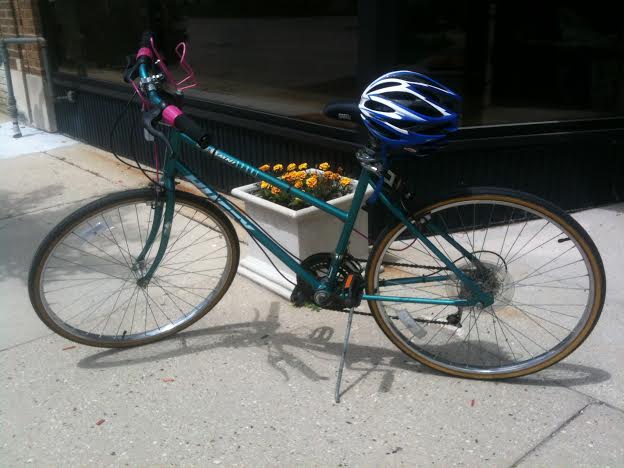
Instead of driving everywhere, jump on your bike. The picture above is of the bike I use to go to work or run errands. Bike riding is great exercise, greener transportation and a great stress relief.

We spend a lot of time at work sitting in front of the computer or the phone. Prop your laptop on a bookshelf to create a standing workstation. You can also purchase a sit-stand workstation you can adjust throughout the day. Get a headset and stand during phone calls.

Walk during your lunch break. Walk to the coffee shop, the mailbox, and the dry cleaners. Get your errands done on foot or just enjoy a stroll outside.

Take a movement break every hour. Do some desk push-ups, squats or walk the stairs. Need to communicate with a coworker? Don't email, walk over and talk to them.

Human beings are meant to move, not sit in chairs all day. I want to challenge you to incorporate more movement into your day. I'd love to read your comments how you move more and sit less.

Have You Had Your Prebiotics Today?


Prebiotics and resistant starch may be the missing link to your digestive health. Indigestible fibers that allow healthy bowel flora to proliferate and thrive are often called prebiotics. They are also known as resistant starches, because they are resistant to human digestion. I recently had a client call the addition of resistance starch to her diet, “the missing link my body needed”.

A starch that resists digestion and reaches the large intestine becomes food for the healthy bacteria in the large intestine. These bacteria can break down and “feed on” the resistant starch thus providing the friendly bacteria with the fuel they need to survive.

Imbalance of the quantity and type of bacteria species present in the gut contributes to gastrointestinal illness, blood sugar imbalance, obesity, mood disorders, and immune system challenges.

Green unripe bananas and plantains are one of best sources for prebiotic fiber content with 27 to 30 grams of fiber in one medium banana. Green bananas are essentially inedible. They are most easily incorporated into diet by blending into a smoothie.

One mistake frequently made incorporating prebiotic fibers from bananas is consuming bananas that are too ripe. Once the banana ripens the resistant starch is degraded and become a digestible starch. Thus, no longer a good prebiotic fiber source. In fact, the riper the banana becomes the higher the glycemic (blood sugar) response.

It can be difficult to find bananas that are very green. I made several trips to my local grocery store to find these bowel flora champions. I find it helpful to ask the produce clerk to take a look at the shipment that just arrived, noting the day the shipment arrives, for the best chance to gobble up these green beauties.

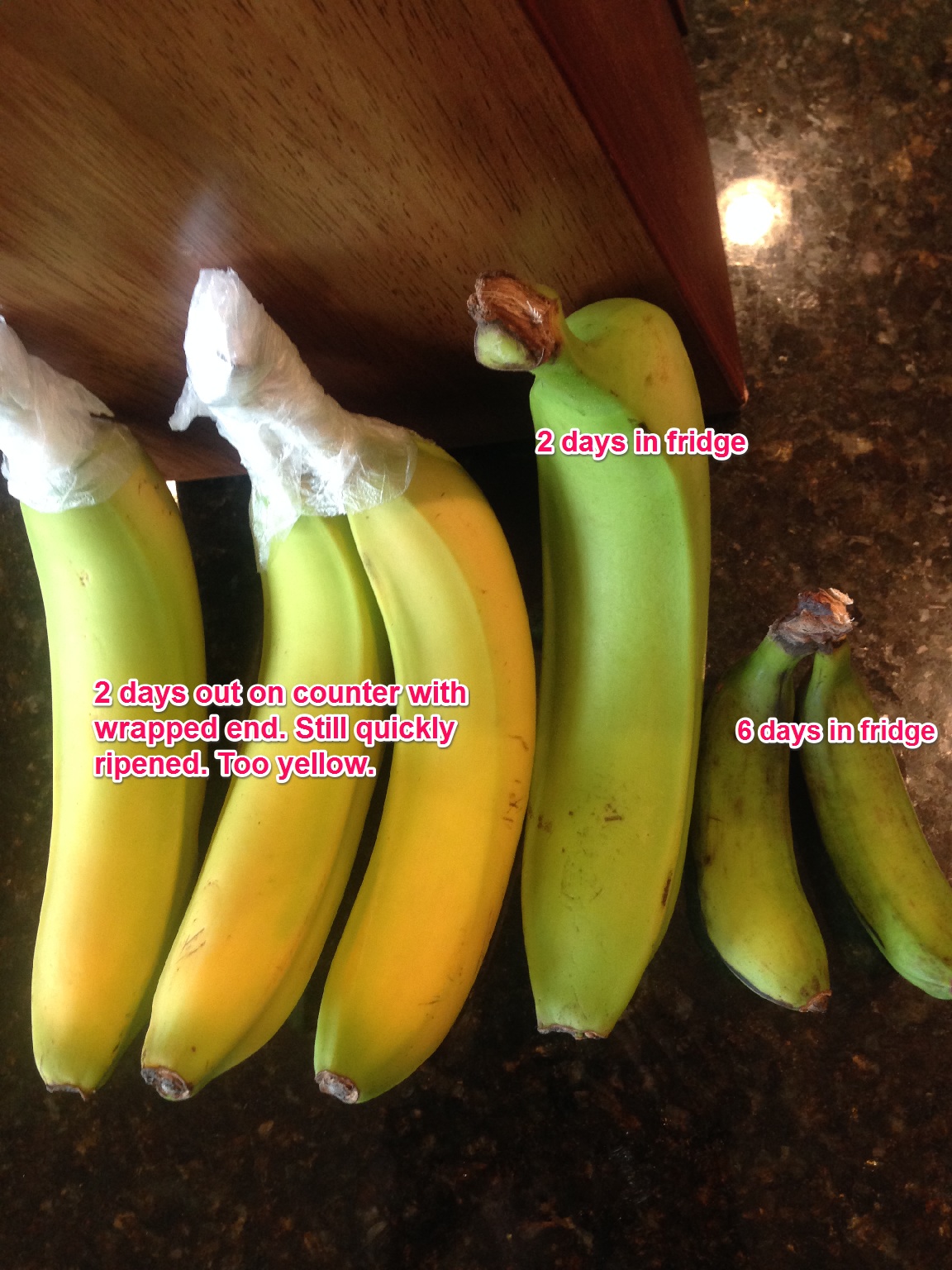
In an effort to keep green bananas green I tried a few strategies. One that sounded promising was wrapping the end of the banana to prevent the ethylene gas, which ripens the fruit, from dissipating. You can see from the image this clearly did not work. After a mere two days the green bananas were no longer green. What I found works best is placing the green bananas in the fridge. This halts the ripening process. The skin of the banana will turn brown, which is normal, but the fruit inside is still good. I’ve kept bananas in my fridge for up to 8 days and they hold up well other than the brownish black discoloring that develops on the skin. The banana will be firm and require a knife to cut the skin off the banana.

If you’d like to learn more about prebiotics and strategies to support resolution of common gastrointestinal complaints read the recently release Cureality Guide to Healthy Bowel Flora by Dr. Davis. This guide is one of the many valuable resources available exclusively to Cureality.com members.
---Lisa Grudzielanek, MS, RDN,CD,CDE
Cureality Nutrition Specialist

Something is Better Than Nothing


This past weekend I attended a fitness conference with an amazing lineup of presenters. Even after 11 years in the fitness industry, I love attending these events. I’m a lifetime student always learning more and honing my craft.

I went to a presentation by Al Vermeil about joint mobility, not knowing anything about him. To my surprise, Al was the strength and conditioning coach for the Chicago Bulls and the San Francisco 49ers the years these teams won championships in their respective sports. That’s a pretty impressive resume.

Al was a great presenter, full of fun and practical advice. During his presentation, Al said the following statement:

“Every time you miss a workout, the next one is easier to miss.”

This statement really hit home because I’ve seen this time and time again working in the fitness industry and in my own life. One workout is missed, then an entire week of workouts are missed, then it’s been an entire month of never setting foot back into the gym.

It’s easy to get thrown off your workout routine when life gets busy and days get long. So what do you do? Do you just trash your workout plan?

The all or nothing attitude is common when it comes to making health changes. Either you’re following your plan 100% or you not. I’m here to tell you that doing something is better than nothing. Doing part of your workout or a mini workout is better than missing an entire workout.

The other day I had the choice to do something or nothing. I had a full day of work meetings, video, and family commitments. Here is what happened. I did shorter variation of my joint mobility routine. I followed that with a quick kettlebell circuit of 25 kettlebell swings, 12 kettlebell overhead presses, and 12 kettlebell goblet squats. I did three rounds of this circuit. That’s it! The following day, I got back to my regular exercise routine.

Be consistent with movement and you’ll always see improvements. That’s the magic of exercise. You'll get better if you just do it.

What’s the Problem with My “Healthy” Bowl of Oatmeal?


Food manufacturers have clever ways to market foods to us. Unfortunately, many foods that have a reputation for being healthy are no more than junk food disguised as a healthy food choice. I commonly see people under the influence of a “health halo” effect. This is due to strategic marketing efforts. People overestimate the nutritional value of a food that is labeled “good for you” or they underestimate the negative impact of a food because it contains a healthful ingredient, like flaxseed or fiber. In fact, a recent study from the University of Houston found that terms on food labels such as antioxidants, all-natural, and gluten-free often are used to give an otherwise standard food a "healthy" halo, and influence consumption from the well- intended consumer.

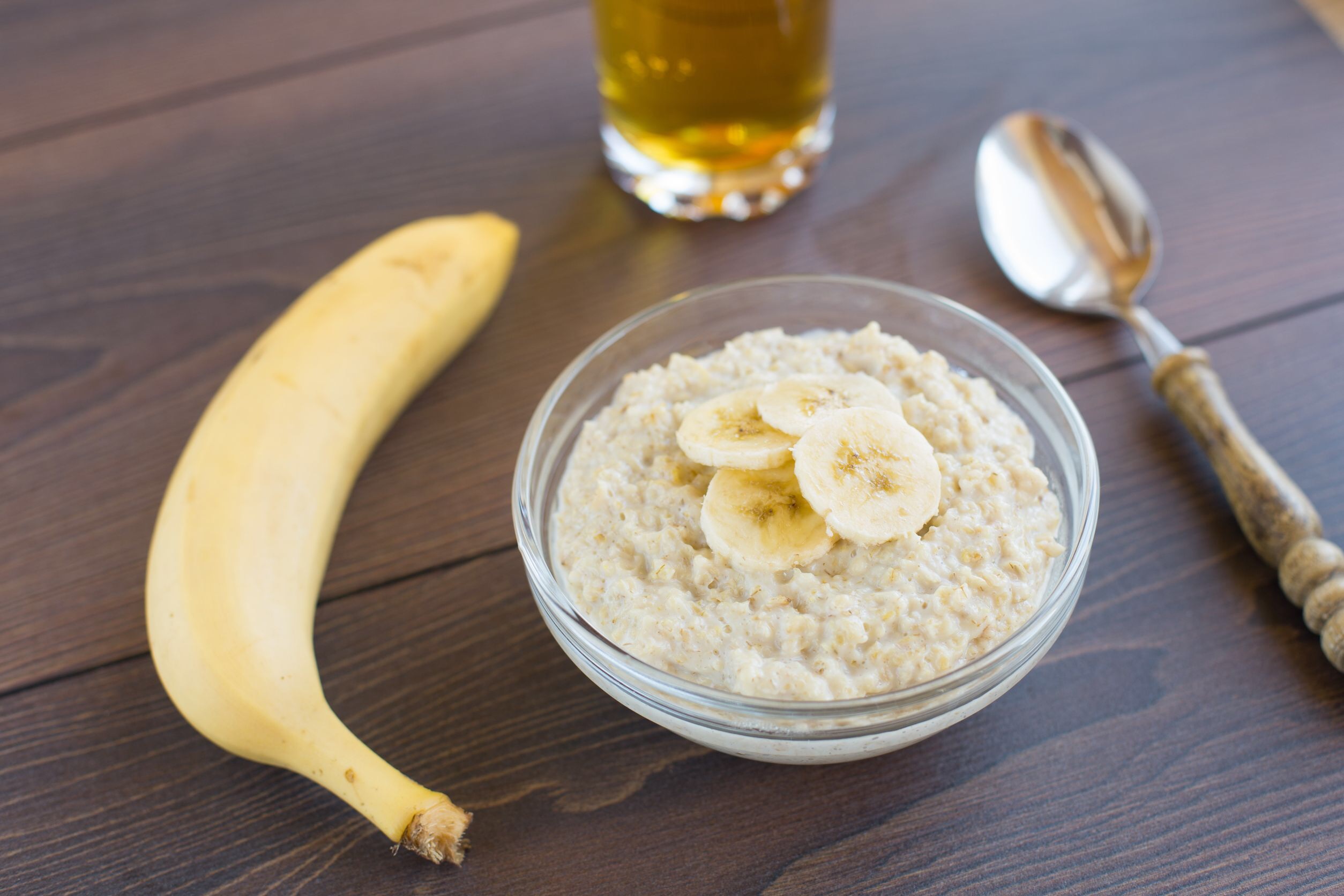
Case in point-- oatmeal. We’ve all heard about the cholesterol lower benefits from soluble fiber contained in oatmeal. It’s blasted all over packages with a paid endorsement from The American Heart Association. However, that’s not the whole story. Most people enjoy a cup of oatmeal with one to two tablespoons of added sugar and fruit such as a ripe, yellow banana. In other words, let’s enjoy a bowl of “send my blood sugar through the roof” high glycemic oatmeal. The glycemic index of oatmeal is 55, and instant oatmeal is 83. Top that with more table sugar, glycemic index 58-65 and better yet top that with a high glycemic, ripe banana with a GI of 62.

Preparing one packet of regular instant oatmeal with one tablespoon of sugar and a medium ripe banana five days per week would result in the sugar equivalent of more than 5 1/2 cups of sugar per month!

Furthermore, the story many Americans are missing is all of that sugar intake, from their so-called “healthy” bowl of oatmeal, actually raises small-dense LDL cholesterol particles, increases blood sugar and contributes to insulin resistance, faulty gut flora, and belly fat.

How do we improve upon our bowl of oatmeal? Enjoy a bowl of hot coconut flaxseed cereal, eggs any variety of ways, or last night’s leftover salmon and vegetables.

The Cureality program provides tools, guidance, and support that does not follow the party line but rather offers nutrition solutions that address the underlying causes for proliferation of many chronic diseases.

Power in Numbers


In his book, The Wisdom of Crowds, author James Surowiecki begins with the story of an ox judging competition in which 800 people—not ox experts nor breeders, just ordinary people attending a county fair—were asked to guess the weight of the ox. The competition was conducted by a scientist, Francis Galton, who held a low opinion of the intelligence of the average person, remarking that “the stupidity and wrong-headedness of many men and women being so great as to be scarcely credible.” He hoped to prove, by examining the various guesses, that the average person had no idea of how to judge the real answer. After all participants casted their written votes, Galton tallied up the total and averaged the result: 1,197 pounds—just one pound off from the real weight of 1,198 pounds. Few individuals actually guessed the correct weight themselves but, when the opinions of many were combined, the result was near-perfect.

Crowds can also be a source of irrational behavior, panic, and stampede. Witness any modern football or soccer game, for instance, in which fights break out over an issue as minor as a disputed call or a heckle. Or go back through history to the countless events when mass hysteria ruled, such as the Salem Witch Trials or Orson Welles’ War of the Worlds radio broadcast.

Let’s put aside examples of mass emotional chaos of the sort that causes crowds to stampede store doors on Black Friday. Let’s focus instead on conscious, considered, thoughtful opinions. We all accept that there are as many opinions on issues as there are people, not uncommonly with widely divergent views. But can we, as Galton’s famous experiment did, combine the opinions of many and come away with some fruitful insight—the correct answer? Just as the people participating in Galton’s experiment were not experts, so Cureality participants—a crowd-sourced collection of opinions—are not experts. If we were to poll everyone to identify their area of expertise or experience, it would likely include finance, the retail industry, raising children, or teaching—but not health. Yes, we have experts curating the direction of content, but we also crowd-source collective opinion.

Right now, Cureality is based on existing science, the philosophy of self-directed health, combined with guidance and community to help the participant along in the sometimes complex world of health questions. But as our processes and procedures improve, can we—like Galton’s ox weight guessers—come away with coalescent wisdom, answers to our health questions, near-perfect solutions to health conditions that have eluded the “experts” for centuries?

I think that we can. No, I know that we can. We enter a new age in information and harness the power of the crowd-sourcing of solutions, even when no single individual has the complete answer herself.

Use This Trick to Boost Exercise Motivation


Are you been struggling to get your workouts in? 

Do you belong to a gym and find that you're not going?

Do you have exercise equipment sitting in your basement collecting dust because you find that you just can’t get yourself down there?

If you answered, “yes” to any of these questions you are not alone. Many people struggle with finding the motivation to exercise.

The problem here is that you have head trash going on. Head trash is that voice inside your head coming up with a million excuses that inhibit you from carving out a bit of time to take care of yourself.

Head trash will tell you that you’re too tired, even though a workout would give you a boost of energy.

Head trash will tell you that you’re too busy, even though you just spent a half hour on Facebook.

Head trash is barking at you to take care of others, even thought you know your health is important for you well being.

Head trash is a real conflict that can get in the way of our health and fitness goals. We start an exercise program with the intentions of a long-term commitment. But after the initial excitement wears off, we find our workouts occurring less frequently. Head trash begins to take over and soon we find ourselves not exercising at all.

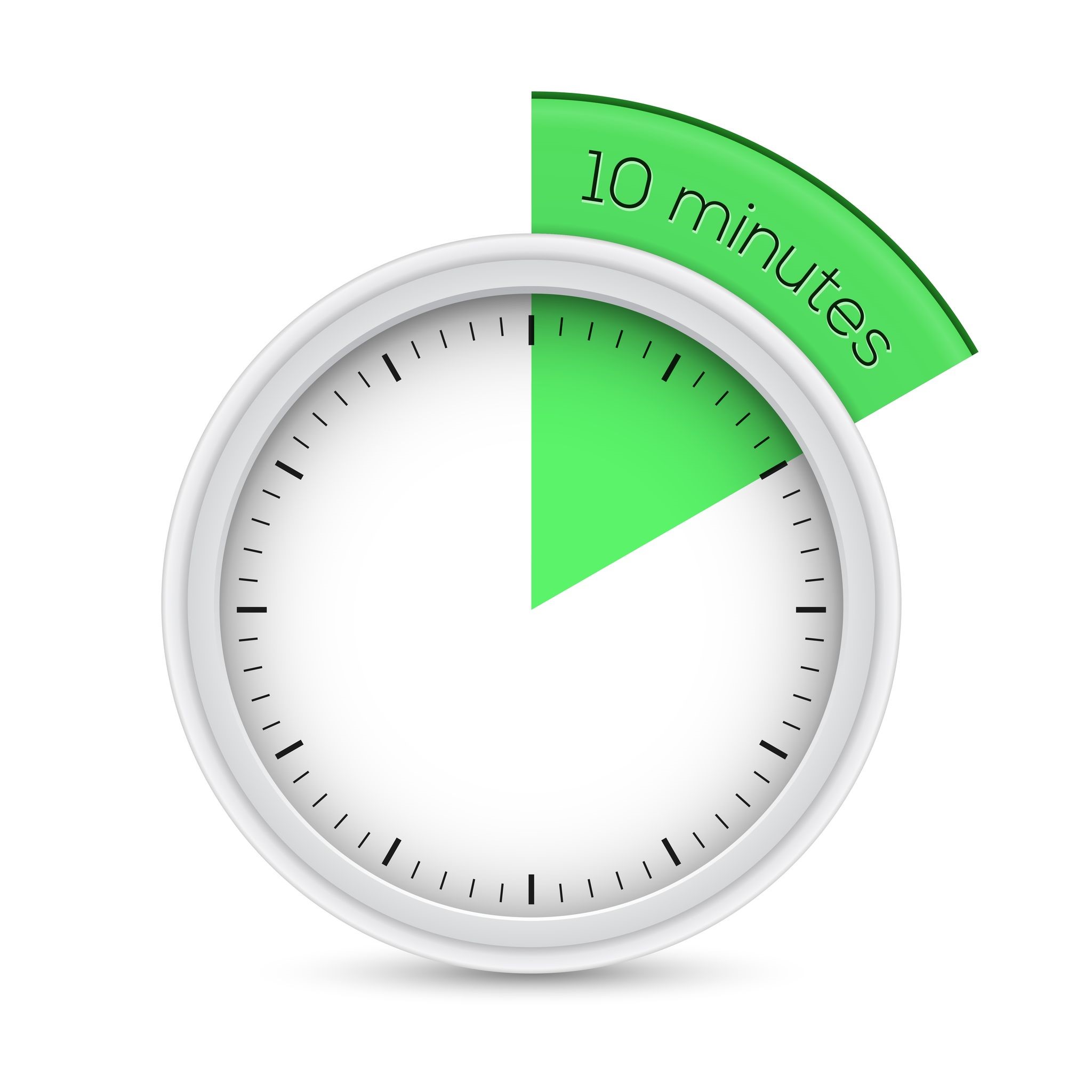
Here is my secret for winning the battle over the head trash that keeps getting in way of your workouts. Tell yourself that you are only going to exercise for 10 minutes and evaluate if you want to continue. If you're truly too tired you can stop after 10 minutes. If you're truly too busy you can stop and move onto a task that needs your attention.

Making this deal with your mind that you are only going to exercise for 10 minutes seems reasonable. The head trash will become quite because your mind is convinced it has an out within 10 minutes.

I've used this 10-minute trick myself. I grind through the first few minutes, but then the magic happens. Once you hit the 10-minute mark your body takes over. Exercise feels amazing and your body is energized and enjoying the movement. You have tricked your mind to get over the hurdle of starting and now you’re in the exercise groove.

Try the 10-minute trick next time your head trash is getting in the way of your workout. You'll be amazed how your workout consistency improves.

All posts by william-davis

A curious case of coronary plaque regression and progression

John received a coronary stent in 2003 following a small heart attack. The artery causing the heart attack was a diagonal artery, a branch of the important left anterior descending coronary artery (in the front of the heart). His cardiologist at the time advised him, "Take Lipitor and we'll do stress tests every year. Come back if you have any more chest pain." That was the full extent of John's preventive care.

He came to me for a second opinion and, naturally, we enrolled him in our program. We began by obtaining a CT heart scan score, though we had to exclude the stented diagonal artery. His score: 471. At age 51 and physically active, John had 7 additional abnormal lipoprotein patterns identified. We counseled John on better approaches to food choices, his weight target, fish oil, and correction of all lipoprotein patterns.

Two years later, John's repeat heart scan score: 511 . John was initially disappointed with the increase. But a closer look yielded something entirely different: the right coronary artery and circumflex (no stents) showed 20-30% reduction in their scores. The increase in total score was entirely due to substantial increase in score just outside the stent, in the left anterior descending artery. In other words, all of the increase in score was due to growth of a plaque at the mouth of the stent in the diagonal artery.

This is curious: profound regression of plaque with a big drop in score in the "un-instrumented" arteries, but tremendous growth of plaque and an increase in score in the "instrumented", or stented, artery, all in the same person's heart.

I don't know how controllable this specific situation in the left anterior descending and stented diagonal will be, and I'm unaware of any specific strategies to impact on this situation. The whole world of tissue growth within or around stents is littered with high hopes followed by failures. The drug-coated stents have been the only partial solution to this problem, though that's precisely the sort of stent John received.

Is there a message here? The message I take from this is that you and I should work like mad to keep from receiving a stent. Once they're implanted, we have less control over our coronary future. We can indeed regress ("reverse") coronary plaque. But we may not be able to regress the sort of tissue that grows in response to a stent implantation.

When is a heart scan score of 400 better than 200?

Imagine two people.

Tom is a 50-year old man. Tom's initial heart scan score is 500--a bad score that carries a 5% or more risk for heart attack per year.

Harry is also 50 years old. His heart scan score is 100--also a concerning score but not with the same dangers of Tom's much higher score.

Tom follows a powerful heart disease prevention program like the Track Your Plaque program. He achieves the 60:60:60 lipid targets; chooses healthy foods; takes fish oil; raises his blood vitamin D level to >50 ng/ml, etc. One year later, Tom's heart scan score is 400, a 20% reduction from his starting score.

Harry, on the other hand, doesn't understand the implications of his score. Neither does his doctor. He's casually provided a prescription for a cholesterol drug by his doctor but nothing else. One year later, Harry's heart scan score is 200, a doubling (100% increase) of the original score.

At this point, we're left with Tom having a score of 400, Harry with a score of 200. That is, Tom has twice the score, or 200 points higher, compared to Harry. Who's better off?

Tom is better off. Even though he has a significantly higher score, Tom's plaque is regressing. It is therefore quiescent with its components being extracted, inflammation subsiding, the artery is in a more relaxed state, etc.

Harry's plaque, in contrast, is active and growing: inflammatory cells are abundant and producing enzymes that degrade supportive tissue, excessive constrictive factors are constantly causing the artery to pinch partially closed, fatty materials are accumulating and triggering a cascade of abnormal responses.

This is therefore a peculiar situation in which a higher score is actually better than a lower score. It reflects the power of adhering to a preventive program. It also demonstrates how two scans are better than one because they show the rate of increase given a particular preventive approach.

Warning: Your cardiologist may be dangerous to your health!

Warren had a moderately high LDL cholesterol for years and took a statin drug sporadically over the past 7 years. Finally retired from a successful real estate investment business, he had a CT heart scan to assess his heart disease status.

Warren's score: 49. At age 59, this put him in the lowest 25%, with an estimated heart attack risk of 1% per year or less--a relatively low risk. At this heart scan score, the likelihood of an abnormal stress test was less than 3%, or a 97% likelihood of a normal stress test. Most would argue that a stress test would be unproductive, given its low probability of yielding useful information. In other words, there would be a 97% probability of normal blood flow through Warren's coronary plaque, and less than 3% likelihood that a stent or bypass surgery would be necessary.

Warren was also without symptoms. He hiked and biked without any chest discomfort or breathlessness. A prevention program like Track Your Plaque to gain control over future coronary plaque growth was all that was necessary and Warren had high hopes for a life free of heart attack and major heart procedures.

Then why did he go through a heart catheterization?

Warren did indeed undergo a heart catheterization on the advice of his cardiologist. When I met Warren for another opinion, it became immediately obvious that the heart catheterization was completely unnecessary. Then why was this invasive procedure done? There can only be a few reasons:

--The cardiologist didn't truly understand the meaning of the heart scan score. "We need to do a 'real' test."

--The cardiologist was terrified of malpractice risk for underdiagnosing or undertreating any condition, no matter how mild.

--The cardiologist wanted to make more money. Talking about heart disease prevention is a money-saving, not a money-making, approach.

Regardless of which of the three motivations was at work here, they're all inexcusable. A disservice was done to this man: he had an unnecessary procedure, incurred some risk of complication in the process, and gained nothing.

An ignorant or profit-seeking cardiologist is worse than the unscrupulous car mechanic who, when presented with an unknowing car repair customer, proceeds to replace the carburetor and rebuild the engine when a simple 5-minute adjustment would have taken care of the problem.

I estimate that no more than 10% of my colleagues follow such practices, but it's often hard to know who is in that 10%. Ask pointed questions: Why is the catheterization necessary? What is the likelihood of finding information useful to my health? What are the alternatives? (By the way, the emerging CT coronary angiograms can be a useful alternative in some situations like this.)

Track Your Plaque is your source for credible information. Be well armed.

I don’t have high blood pressure!

Art undeniably had high blood pressure.

At age 53, he had all the “footprints” of high blood pressure that’d been present for at least several years: abnormal patterns by EKG, abnormally thick heart muscle, and an enlarged aorta by an echocardiogram. These sorts of changes require many years to develop. Art’s blood pressure was 140/85 sitting quietly in the office.

“That’s about what my primary care doc gets, too. Whenever it’s high, he takes it again after a few minutes and it always comes down.”

Art tried to persuade me that his blood pressure was high today only because of the traffic on the way into the office. When I dismissed this as a cause, he insisted that stress he’d been suffering because of his teenage son was the cause. “I just know I don’t have high blood pressure!”


Who’s right here? Well, Art is not here to defend himself. But one fact is crystal clear: you cannot develop complications of high blood pressure unless you truly have high blood pressure!

In other words, Art’s abnormal changes in heart structure (thickened heart muscle and enlarged aorta) are serious changes that develop only with years and years of sustained blood pressure at least as high as the one in the office. His blood pressure almost certainly ranged much higher at other times, particularly during stressful situations like waiting in the check-out line at the grocery store, watching a suspenseful TV show, petty irritations at his job, and on and on.

Blood pressure does not have to be high all the time to generate complications of high blood pressure. It can be sporadic, variable, even occasional. Clearly, sustained high blood pressure is the worst situation that creates adverse consequences more quickly. But blood pressure that wavers from low to high only some of the time can still, given sufficient time, cause the very same unwanted effects.

Control of blood pressure is crucial to your coronary plaque control program. Blood pressure may be boring: not as exotic, say, as lipoproteins, and not as fun as talking about nutritional supplements. But neglect blood pressure issues and you will not gain full control over coronary plaque growth—-your heart scan score will increase.

Watch for an upcoming Special Report on the Track Your Plaque Membership website, a full detailed discussion of how to recognize when blood pressure is an important issue, along with a full discussion of nutritional methods to reduce it, often sufficient to minimize or eliminate the need for medication.

Are there any alternatives to niacin?

In the Track Your Plaque program, we tend to rely a great deal on niacin. When used properly, 90-95% of people will do just fine and achieve their lipid and lipoprotein goals with the help of niacin, along with their other efforts.

Unfortunately, around 5% of people simply can't take niacin without intolerable "hot flush" effects, or occasionally excessive skin sensitivity--itching, burning, etc.

Why does this happen? These 5% tend to be "rapid metabolizers" of niacin, i.e. they convert niacin (nicotinic acid, or vitamin B3) into a metabolite called nicotinuric acid. Nicotinuric acid is the compound responsible for the skin flush. Most people can slow or reduce the effects of nicotinuric acid by:

--Taking niacin with dinner, so that food slow tablet dissolution.

--Taking with plenty of water. Two 8-12 oz glasses usually eliminates the flush entirely in most people.

--Taking with an uncoated 325 mg tablet of aspirin in the first few weeks or months. Eventually, you will need to revert back to a better stomach tolerated dose of 81 mg, preferably enteric coated. But a full 325 mg uncoated can really help in the beginning, or when you have any niacin dose increases, e.g., 500 mg to 1000 mg.

But even with these very effective strategies, some people still struggle. That's when the question arises: Are there any alternatives to niacin?

Well, it depends on why niacin is being used. If you and your doctor are using niacin for:

Raising HDL--Then weight loss to your ideal weight; reduction of processed carbohydrates, especially wheat products; avoidance of hydrogenated ("trans") fats; a glass or two of red wine per day; dark chocolates (make sure first ingredient is chocolate or cocoa, not sugar), 40 gm per day; fish oil; exercise; other prescription agents (fibrates like Tricor; TZD agents for diabetes; cilostazol (Pletal)). Niacin is by far the most effective agent of all, but, if you're intolerant, raising HDL is still possible through a multi-faceted effort.

Reduction of small LDL--The list of effective strategies is the same as for raising HDL, but add raw almonds (1/4-1/2 cup per day), oat bran and other beta-glucan rich foods like oatmeal. Reduction of processed carbohydrates is especially important to reduce small LDL.

Reduction of Lipoprotein(a)--This is a tricky one. For men, testosterone and DHEA are effective alternatives; for women, estrogen and perhaps DHEA. Hormonal preparations of testosterone and estrogen are stricly prescription; DHEA is OTC. I have not seen the outsized benefits on lipoprotein(a) claimed by Rath et al by using high-dose vitamin C, lysine, and profile, unfortunately. We are clearly in need of better alternatives to treat this difficult and high-risk disorder.

Reduction of triglycerides/VLDL/IDL--I lump these three together since they all respond together. If you're niacin intolerant, maximixing your fish oil can be crucial for reduction of these patterns using doses above the usual starting 4000 mg per day (providing 1200 mg EPA+DHA). Reduction of processed carbohydrates, eimination of processed foods that contain high-fructose corn syrup, and weight loss to ideal weight are also very effective. "Soft" strategies with modest effects include green tea (>6 cups per day) or theaflavin 600-900 mg/day; raw nuts like almonds, walnuts, and pecans; exercise; soy protein.

Reduction of LDL--Lots of alternatives here including oat bran (3 tbsp per day), ground flaxseed (3 tbsp per day), soy protein (25 grams per day), Benecol butter substitute (for stanol esters), soluble fibers like pectin, psyllium, glucomannan; raw nuts like almonds, walnuts, and pecans.

In future, should torcetrapib become available (by prescription), this will add to our available tools for these areas when niacin can't be used. Until now, the alternatives to niacin depend on what you and your doctor are trying to achieve. In the vast majority of cases, HDL, small LDL, triglyceride, etc. goals for heart scan score control can be achieved, even when niacin is not well tolerated.

Is flaxseed oil a substitute for fish oil?


This question comes up so frequently that it's worth going over.

Flaxseed oil is a wonderful oil rich in linolenic acid, which may provide health benefits all by itself. Some authorities have speculated that the substantial reduction in heart attack seen in the Lyon Heart Study, the study that demonstrated the healthy power of the Mediterranean diet, is due to linolenic acid.

Flaxseed oil is also rich in monounsaturates and low in saturates, both desirable qualities. Of course, I'm talking here about flaxseed oil, to be distinguished from flaxseed , which are the intact seeds. The seeds themselves also contain the same oils, but contain other components, specifically lignan, a plant fiber with suspected health benefits like reduction in cancer risk.

Despite all flaxseed oil's wonderful properties, it is definitely not a substitute for fish oil. Why do we use fish oil for our coronary plaque control program (trying to reduce your heart scan score)? Several reasons. Fish oil:

--Dramatically reduces triglycerides, usually by 50% or more.
--Dramatically reduces specific lipoprotein classes like VLDL
--Dramatatically reduces, often eliminates, abnormal postprandial (after-eating) lipoprotein patterns, like IDL (intermediate-density lipoprotein)
--Has been conclusively shown to reduce risk of heart attack and death from heart attack (GISSI Prevenzione Trial).
--Has been shwon to reduce risk of stroke.
--Modifies blood clotting parameters, particularly a 20% reduction in fibrinogen.

Flaxseed oil, or linolenic acid concentrate for that matter, do not accomplish any of these effects, all crucial if you are to gain control over your coronary plaque.

Flaxseed oil and flaxseed remain wonderful nutritional agents for their own reasons. But they will not substitute for fish oil in your program. Only fish oil--the real thing--does the job.

If you have coronary artery disease . . . do you know why?

This conversation is aimed primarily at non-followers of the Track Your Plaque program, because if you were a follower, you’d already know the answer!

I saw a woman in the hospital today. She’d just survived her second heart attack one week earlier. At 51 years old, she was understandably shaken, perhaps terrified. She felt that her future was uncertain and, in fact, had discussed with her husband what he should do to prepare for a future without her.

One week earlier, she’d received three stents that successfully aborted her heart attack. But, as is always the case, the modest delays of ambulance transport, the emergency room preliminaries, then of mobilizing an available cardiologist and catheterization laboratory team, totaled nearly two hours before her stent procedure. Inevitably, a moderate amount of damage had been done to her heart.

Her first “event” had been very similar: very little warning, then 911 and the flurry of activity. Both times, the cardiologists (two different physicians) complimented the patient on her prompt action. Both also called her heart attacks “close calls”.

She defied the odds with two near-death events. So, when I met her a week after her last heart attack, I asked an obvious question: “Has anyone told you why you’re having these heart attacks?”

She looked completely puzzled at first. She then said, “No, not really. I just assumed it was genetic. My mother went through the same thing when she was my age. But she didn’t get as far as I have, since they didn’t have these procedures back then.”

To me, this seems inexcusable: This woman had experienced two brushes with death and no doctor had established a cause. Could this woman’s belief be true, that it’s just genetic?

While there are, indeed, genetic causes for heart disease, the vast majority of these genetic causes are 1) identifiable, and 2) correctable. Genetic does not necessarily mean hopeless. It just means that the usual equation of heart disease risk management (heart disease = LDL cholesterol = need for Lipitor) has limited value. It would be like giving penicillin to people for any and all infections. It will work occasionally, but it will fail miserably in a great many cases. Treating LDL cholesterol with statin drugs is just like that.

Perhaps this woman has lipoprotein(a), a serious genetic trait that predicts heart disease at a young age and is largely unaffected by statin drugs. Or, she may have a severe excess of small LDL, only partially suppressed by statins. If she has the combined pattern of lipoprotein(a) and small LDL, that means she has two statin-unresponsive and significant genetic traits. But they respond to niacin, specific nutritional strategies, and several other agents.

The message: If you have coronary disease, you need to insist on knowing why. “It’s genetic” is not an acceptable answer. “There’s no proof of any heart disease causes beyond cholesterol” is also nonsense. “Everyone gets heart disease, or “hardening of the arteries”, eventually. You just got it a little before everyone else” is also patently ridiculous.

Identifying the causes of your coronary disease (or coronary plaque if you’ve had a CT heart scan) is the first step in developing a program of treatment that provides you with control over this disease.

Have you tried inulin yet?

If you haven't yet tried it to facilitate weight loss, it's really worth giving the new inulin-containing product, Fiber Choice "Weight Management", a try.

Recall (from a prior Heart Scan Blog) that inulin is a vegetable-based fiber found in celery, green peppers, etc. that, when exposed to water, expands to many times original volume. This simple phenomenon yields satiety--a feeling of fullness.


The manufacturer of the product has also added green tea, which has been shown in two small clinical studies to enhance weight loss, though by a different route.

We've been advising patients to chew two of the strawberry flavored tablets one hour before every meal (or with breakfast if you eat immediately in the morning). You'll be satisfied with less food and you'll experience less intense food cravings.

Though no one so far has achieved a huge drop in weight, it does seem to enhance a slow, gradual weight loss larger than achieved by diet and exercise alone. And it's very safe and inexpensive. If you give it a try to help you lose weight, let us know what kind of results you've obtained.

Fish oil update on Life Extension

An article of mine came out in Life Extension Magazine and is available on the online version at:

http://www.lef.org/magazine/mag2006/sep2006_report_omega1_01.htm

This is an update on the heart health applications of fish oil.

Or, go to to www.lef.org and put fish oil into your on-site search and you'll come back to it in future.

Of course, it comes with Life Extension's promotion of its supplements.

Although it's not yet available online, the hard copy version of an article I wrote on homocysteine is available in the October, 2006 Life Extension Magazine. If you're not a member of their program, they'll send you a free copy just for signing up for it without obligation. Go to the home page of www.lef.org to do so. Or, Life Extension is available at newstands if you're in a rush or don't want to sign up for a free copy.

More on Vitamin D

If you haven't done so already, you should subscribe to Dr. John Cannell's free newsletter on vitamin D issues. His newest issue is available at:

http://www.vitamindcouncil.com/newsletter/2006-aug.shtml

A sign-up to subscribe is available on the same page.

I continue to be shocked and amazed at the prevalence and magnitude of vitamin D deficiency in the people I see every day. It's been a beautiful summer with very little rain. Most days have been in the 70-80 degree range--very comfortable to be outdoors in the sun and getting skin expoxure to activate vitamin D in the skin.

Yet, in the vast majority of people I see, summer blood levels of vitamin D are virtually indistinguishable from winter levels. Both hover around the 30 ng/ml range. Summer levels in Wisconsin people seem to be no more than 10 ng/ml higher than winter levels. This remains true even in people who spend a lot of their day outdoors gardening, walking, etc. wearing shorts and a short-sleeved shirt, i.e. with plenty of skin surface area exposed.

I'm at a loss to explain precisely why. Yes, it is Wisconsin. But a direct sun overhead, 75 degree day should be providing plenty of sun. My suspicious is that a combination of factors are at work: people are not spending as much time outdoors as they claim; they often seek shade; use sunscreen; and they're overweight. (Excess weight decreases vitamin D blood levels dramatically, yet another reason not to get fat!)

Read more about vitamin D by checking out Dr. Cannell's insightful comments on the unfolding vitamin D story. He holds nothing back.
All posts by william-davis

Coenzyme Q10 and statin drugs

Although drug manufacturers claim that muscle side effects from statin drugs occurs in only around 2% or people or less, my experience is very different.

I see muscle weakness and achiness develop in the majority of people taking Lipitor, Crestor, Zocor, Vytorin, etc. I'd estimate that nearly 90% of people get these feelings sooner or later.

Thankfully, the majority of the time these feelings are annoyances and do not lead to any impairment. Full-blown muscle destruction is truly rare--I've seen it once in over 10 years and thousands of patients.

The higher the dose of statin drug and the longer you take it, the more likely you're going to have muscle aches.

I experienced a strange phemomenon myself today. I worked outdoors for about 4 hours, pulling weeds, digging in the dirt, spreading topsoil. (I have an area of overgrowth in the front yard.) Admittedly, I worked pretty hard and it was a warm, humid day.

I was sore, as you'd expect at age 49. But, much more than that, I was exhausted--my muscles ached and I had barely enough strength to get up the stairs.

Hoping for some relief, I took an extra dose of coenzyme Q10. I usually take 50-100 mg per day. Today, when I felt this overwhelming muscle fatigue, I took an additional 200 mg. Within 10 minutes, I felt a surge of energy. It was, in fact, a perceptible, quite dramatic feeling.

I am thoroughly convinced, through my own experiences on Lipitor (I have a high LDL particle number despite a healthy lifestyle, among other abnormalities), and the experiences of many other people, that coenzyme Q10 can be an extremely useful tool to minimize the muscle aches and weakness of the statin drugs.

If you do indeed need to take one of these agents, coenzyme Q10 is worth knowing about. Supplementing coenzyme Q10 has, for me, been a real lifesaver. For many people, LDL reduction is a crucial part of their heart scan score control program. In my experience, many of them would not be able to take the drug without eozyme Q10.

Blast your LDL with oat bran and almonds

Nearly all of us can use an extra boost in reducing LDL cholesterol. We have a large number of people, in fact, who have reduced LDL into the Track Your Plaque range of 60 mg/dl or less without the use of statin cholesterol-reducing drugs.


Oat bran is among my favorite ways to reduce LDL. Three tablespoons per day is a really effective method to drop your LDL around 20 points. There's twice the beta glucan (soluble, or "viscous", fiber)in oat bran, as compared to the more popular oatmeal. Add oat bran to anything you can think of: yogurt, cottage cheese, vegetarian chili, oatmeal, top desserts with it, etc. Some people struggle to find oat bran in the grocery store. Most health food stores that sell bulk products will have oat bran, usually less than a $1 per pound. Many grocery stores will also have an oat bran hot cereal along with the Cream of Wheat and oatmeal. That's okay, provided the only ingredient is oat bran--no added sugars, etc.


Another dynamite method to reduce LDL 10-20 points is adding raw almonds to your daily food choices. One or two handfuls per day works great. We find it at Sam's Club for around $12.99 for a 3 lb. bag. The plentiful fibers and monounsaturates in almonds keep you full and satisified, take the edge off your sweet tooth, and even blunt the blood sugar rise caused by other foods.

Both these foods are also great ways to combat the metabolic syndrome. Since both fiber-rich oat bran and almonds slow the release of sugars into the blood, blood insulin level is also reduced. This results in a happy cascade of less small LDL, increased HDL, and a reduction in inflammation.

All these wonderful effects contribute to inching you closer to success: dropping your heart scan score.

Pre-diabetes with normal blood sugar

We pay special attention to pre-diabetes, in all its varied manifestations, in the Track Your Plaque program. This is because these factors are potent instigators of coronary plaque growth.

Early in the Track Your Plaque program we ignored these measures. After all, this is a program for heart disease risk reduction, not for mangement of diabetes. But we saw explosive rates of plaque growth when pre-diabetic factors were not controlled--even when cholesterol and related factors were under excellent control.

It became increasingly clear that factors associated with pre-diabetes needed to be managed, as well. This includes small LDL, increased blood sugar, high blood pressure, increased inflammation (as CRP).

Many people, however, have normal blood sugars (100 mg/dl or less) with a high blood insulin level (>10 microunits/ml). (This blood test is available in most laboratories.) This means that they have early resistance to insulin. The pancreas, the source of insulin, responds to the body's unresponsiveness to insulin by increasing insulin production.

Increased blood insulin with normal blood sugar will drive production of higher triglycerides, a drop in HDL, creation of small LDL, and inflammation--and coronary plaque growth, as evidenced by increasing CT heart scan score.

Blood insulin levels can be very effectively dropped by weight loss; exercise; reduction of processed carbohydrates like breads, pretzels, and breakfast cereals; and increased raw nuts and oat products; and vitamin D replacement to normal levels. Drug manufacturers are desperately trying to make this a mandate for drug treatment (Actos, Avandia), but are encountering resistance, since most people without overt diabetes don't want to take diabetic medication (rightly so!).

You and your doctor should consider insulin as a factor to track, especially if you have small LDL, low HSL, or high triglycerides, or any of the other manifestations listed above.

Sometimes small LDL is the only abnormality

Janet is a 58-year old schoolteacher. At 5 ft 3 inches and 104 lbs, she had barely an ounce of fat on her size-2 body. For years, Janet's primary care physician complimented her on her cholesterol numbers: LDL cholesterol values ranging from 100 to 130 mg/dl; HDL cholesterol of 50-53 mg/dl.

Yet she had coronary disease. Her heart scan score: 195.

Lipoprotein analysis uncovered a single cause: small LDL. 95% of all of Janet's LDL particles were in the small category. What was surprising was that this pattern occurred despite her slender build. Weight is a powerful influence on the small LDL pattern and the majority of people with it are overweight to some degree. But not Janet.

How did she get small LDL if she was already at or below her ideal weight? Genetics. Among the genetic patterns that can account for this pattern is a defect of an enzyme called cholesteryl-ester transfer protein, or CETP. This is the exact step, by the way, that is blocked by torcetrapib, the new agent slated for release sometime in future (The manufacturer, Pfizer, is apparently going to sell this agent only packaged in the same tablet as Lipitor. This has triggered an enormous amount of criticism against the company and they are, as a result discussing marketing torcetrapib separately.)

Also note that Janet had a severe excess of small LDL despite an HDL in the "favorable" range. (See my earlier conversation on this issue, The Myth of Small LDL at http://drprevention.blogspot.com/2006/06/myth-of-small-ldl.html.)

With Janet, weight loss to reduce small LDL was not an option. So we advised her to take fish oil, 4000 mg per day; niacin, 1000 mg per day; vitamin D, 2000 units per day; use abundant oat bran and raw almonds, both of which suppress small LDL. This regimen has--surprisingly--only partially suppressed her small LDL pattern by a repeat lipoprotein analysis we just performed. We're hoping this may do it, i.e., stop progression or reduce her heart scan score.

The lesson: Small LDL is a very potent pattern that can be responsible for heart disease, even if it occurs in isolation. And, contrary to conventional thinking, small LDL can occur as an independent abnormality, even when HDL is at favorable levels.

Report from Washington II

Today's discussions at the Society for Cardiovascular Computed Tomography (SCCT) focused on atherosclerotic "plaque characterization".

As CT scanners get better and better at imaging the various components of plaque, some fascinating issues emerge:

--CT heart scans provide insights into what exactly is contained in an individual's atherosclerotic plaque that are not often provided even during heart catheterization. In other words, CT heart scanning is, in many instances, superior to heart catheterization, since it provides images of the artery wall, not just the internal contents.

--Progression (i.e., increase) in heart scan score is a powerful predicter of heart attack risk. Dr. Matthew Budoff of UCLA argued persuasively that the annual rate of increase in score is probably the most accurate measure of risk available, superior to cholesterol and calculated measures like the Framingham risk score.

--Coronary calcium scoring remains the best method to gauge total plaque throughout the entire coronary tree. In a person free of symptoms, the risk of a cardiac "event" (heart attack, death, procedures) is low and additional imaging (like CT angiography) is generally unnecessary.


Dr. Budoff, among the true thought leaders in CT heart scanning, also recounted his perspective on the history of heart scans. He noted that the questions asked through the years have evolved:


1995-2000 Should we do coronary calcium scans?

2000-2002 Do high or low risk patients benefit from coronary calcium scoring?

2003-2004 What is the better scanner, EBT or MDCT?

2006 How often should we perform coronary calcium imaging?


I believe that Dr. Budoff summarizes wonderfully where the Track Your Plaque programs fits into the overall scheme of things: Serial (repeated)CT heart scans to gauge progression or reversal is the wave of the future. We shouldn't just be interested in identifying persons at risk for heart attack. We should also be interested in showing the person at risk exactly how to reduce or eliminate that risk.

Report from Washington


I'm presently attending the Society for Cardiovascular Computed Tomography meetings in Washington, DC, along with 500 of my colleagues. It's exciting to see how interest in CT scanning for heart disease has balloonned in the past couple of years.

Several trends are noticeable today, based on the content and tone of the discussions:

--CT scanning of the heart, and imaging in general, is just getting started. In other words, the capabilities for CT scanners and other devices to detect heart disease (coronary and otherwise) are where the gasoline engine was in the 19th century. Scanning is getting faster, easier, safer, and more precise. Just as few people in 1905 could have predicted that automobiles would be computer-enhanced, high-speed, ubiquitous devices with several per household, the potential for CT imaging for heart disease is truly in its infancy.

--CT coronary angiography (so-called "64-slice CT scans") are not screening tests for hidden coronary disease in people without symptoms. I was grateful that this point has been made and reiterated by several speakers, as this is consistent with our views. Simple CT heart scans for coronary calcium scoring, in contrast, are screening tests. When the radiation exposure of CT angiograms are reduced to tolerable levels, then they may be used as screening tests. We are probably 3-4 years away from this point.

--Both stress testing and heart catheterizations will be partially replaced by CT scanning. In particular, over the next decade, you will see a dramatic drop in unnecessary catheterizations, i.e,, far less people saying "I had a heart cath but they told me that it was normal."


There has been heavy focus on applications of CT scanning for acute settings, particularly the emergency room and hospitals.

What has surprised me is that there is virtually no conversation whatsoever about the preventive uses of CT heart scanning. So far, only Dr. Daniel Berman of UCLA has shown that he has "seen the light": CT scans are a crucial tool for identification of early coronary plaque, and this tells us whether prevention is necessary and with what intensity.

There has been, however, no discussion at all about quantification of plaque in a program of reversal. Perhaps that should come as no surprise, given the imaging-technology focus of this convention. For most of my colleagues, prevention is also not terribly interesting. Identification and treatment of acute disease like impending heart attack is.

Of course, applying the information from your CT heart scan to empower you in a program and reversal is what the Track Your Plaque program is all about. I hope you see the light. I admit that it's not always easy to follow what we are advocating here. Perhaps not too different than telling someone in his horse-drawn buggy that one day he'll be driving a sleek car with onboard computerized mapping, air-conditioning, and micro-chips to modulate engine performance. He's probably tell us we're nuts.

I'll continue to update if any news relevant to our interests crops up in these meetings.

What about the Track Your Plaque failures?

I’d love to tell you that the Track Your Plaque program track record is of 100% success. It’s not.

It is very successful. But we’ve had some people who have failed and failed BIG. These are the people who've undergone bypass surgery, received one or more stents, or had heart attacks. Lesser failures are the people who’ve had large, undesirable increases in heart scan scores of >30% in one year. (The expected rate of increase in your heart scan score without preventive efforts is 30% per year, on average.)

What can we learn from those failures? There were several characteristics that stand out among this small group:

· Non-compliance--meaning they just didn’t stick with it. They started out right but then rapidly lost interest in maintaining all the pieces of the program and neglected their fish oil, niacin, gain weight, etc. Matthew did this and ended up with three stents to his left anterior descending. His slow start was due to skepticism that the program worked and just plain forgetfulness.

· Extreme stress--One of our earliest failures was a 38-year old man whose heart scan score doubled in one year, despite doing everything right. But three family members, all close to him, died within the space of six months, including his mother and a brother. I regard this as one of those instances in which we were powerless, unfortunately, though it is a graphic example of the power of unresolved stress and grief.

· Having a “better way”--These are the couple of people who were convinced that they had a better way to control their heart scan score. David firmly believed that his two dozen supplements and exercise program would drop his score. Instead, they permitted a 42% increase. Lee relied exclusively on chelation, along with several supplements of his own design. Lee had three-vessel bypass surgery.

· Starting too late--Gerome started with a score of 1179, but also was having chest pressure with emotional stress. His stress test was abnormal, with the entire upper half of his heart not receiving blood with exercise on a stress nuclear study (“anterior ischemia”). Gerome received four bypass grafts. Unfortunately, Gerome never really had a chance to engage in the Track Your Plaque program, since his health and safety were in jeopardy as soon as he started.

Have we had any big failures of people who did everything right, were compliant, were not subject to extreme stress (more than just job stress, or financial worries), didn’t neglect the basic requirements of the Track Your Plaque program, and had sufficient time (at least 6 months to 1 year)? No, thankfully, we have not.

No one who has stuck to the program has had a big failure.

Be smarter than your cardiologist

“Do you need a stent?”

Sad to say, but that sentence condenses the wisdom of over 90% of practicing cardiologists.

Prevention of heart disease means take Lipitor or some other statin and cutting the saturated fat in your diet. That’s it. Maybe throw in exercise.

Regression of coronary plaque? That phrase has only entered the conversation since the AstraZeneca-supported trial of Crestor succeeded in achieving 8% regression of plaque (Track Your Plaque Members: See News) as demonstrated by intracoronary ultrasound.


In other words, in the minds of my colleagues, it can’t be true until a drug company tells them it’s true. It’s beyond me why this brainwashing of otherwise intelligent people has occurred, but it is blatantly evident in practice.

Fish oil is another example. The spectacular benefits of fish oil have been known for 20 years. But only recently has it become a “mainstream” practice to recommend fish oil, largely because a drug manufacturer has put a preparation through the rigors of FDA approval (Omacor) and is now marketing directly to physicians. All of a sudden, fish oil is a good thing? No, it’s just achieved legitimacy in the eyes of practitioners because it graces marketing literature.

If you’re reading this, you’re likely interested in coronary plaque regression using the only tool available for you to measure, track, and regress coronary plaque: CT heart scans. Intracoronary ultrasound will achieve the same goal, but it is an invasive procedure performed at heart catheterization, involves threading a wire and imaging probe all the way down the artery, involves real risk of tearing the inner lining of the artery, and is costly (around $14,000-$20,000 for the entire package). Do it every year? That’d be nuts.

If you’re thinking about coronary plaque regression, using fish oil, concerned about patterns like low HDL and small LDL, aware of the vitamin D deficiency issue as a coronary risk factor, etc., you are far more aware than the vast majority of practicing cardiologists. They are interested in what new brand of anti-coagulant to use during their heart catheterization (because the product representative gushes about the new agent—only $1200 a dose!). Or, they are interested in gaining the procedural skills to put in a new device like a biventricular pacemaker. Regress/reverse coronary plaque? What for?

You already know that a conversation about coronary plaque reversal will not be obtained in your cardiologist’s office. Your family practice doctor or internist? Fat chance! Knee arthritis, pap smears, pneumovax inoculations, sore throats, gout, back pain—they’re spread far too thin to know anything more than the most superficial amount about coronary plaque control. Most know nothing.

That’s where we come in. That’s our mission: Educate people about the extraordinary tools that you have available to you, all in the cause of control or reversal of coronary plaque.

Why am I here?

Frank came to the office for an opinion, sent by his (proactive) family physician.

"I really don't know why I'm here, to be honest."

Two years earlier, Frank had a heart attack, survived and received two stents to his circumflex coronary artery. He now took Zocor and his LDL cholesterol was a reasonably favorable 89 mg, total cholesterol 183 mg.

"I walk with my wife every other day. I've been avoiding fish fries. You'll never see me eat fast food."

Frank was correct: If we were going to engage in the conventional approach to coronary disease, Frank was on the right track. We would have postponed his next heart attack or procedure by a couple of years. Stroke, aneurysm, and other atherosclerotic manifestations would be set back, likewise, a few years.

Would Frank have profound control over his disease? Absolutely not. In fact, his disease had probably advanced a huge amount just in the two years since his stents were placed and he was on his "prevention" program. Without his current effort, his coronary plaque would be expected to grow 30% per year. On Zocor and his modest lifestyle efforts, plaque growth was probably in the 14-28% per year range.

So I explained the unique Track Your Plaque approach to Frank. First, we start with a CT heart scan to establish where he was starting. Although he had two stents in his circumflex artery, we still had two other arteries (LAD, right coronary) to score and track.

We then attempt to identify all hidden causes of his heart disease and then correct them.

Of course, Frank had multiple hidden causes:

--HDL too low at 38 mg/dl
--Small LDL-severe, in fact, with 95% of all LDL particles in the small category
--Triglycerides too high
--Excesses of several triglyceride-containing particles (VLDL, IDL)
--Pre-diabetes--Frank had both a borderline high blood sugar and a high insulin level. This is a sure-fire stimulus to coronary plaque growth.
--A severe deficiency of vitamin D (<20 ng/ml)
--An excessivelyhigh blood pressure during exercise--With a blood pressure of 190/102 on the treadmill.

There were others(!), but that was the bulk of the causes behind Frank's coronary disease.

Once Frank recognized that there was indeed a huge panel of hidden causes for heart disease, not just too much fat in his diet and LDL cholesterol, he jumped into the program head first.

The message: The conventional approach is absurdly oversimplified, a certain path to failure for the majority of people. Even if you don't have known coronary disease like Frank, but just have a heart scan score >zero, the same principles apply to you.

Catheterization to “define coronary anatomy”

Gary is an avid jogger. On an average day, he runs 5-6 miles at a good clip. On two occasions recently, however, Gary experienced an ache in his left shoulder at mile 4. It was a toothache-like feeling, but he kept on going without difficulty.

Gary also had a heart scan score of 370.

Upon hearing of Gary’s score and his shoulder sensation, the cardiologist who saw him advised a heart catheterization “to define coronary anatomy”. (This is a real incident.)


What exactly does that mean? Why would Gary’s cardiologist need to define it?

In my view, this is an absurd notion. No one needs to “define coronary anatomy”. This catch-all phrase is commonly used to justify heart procedures. I believe what the cardiologist is saying is that it’s the easiest (for the cardiologist) and perhaps most generously reimbursed method to determine whether Gary’s symptoms are warning of an impending heart attack or not.

The problem is that the question can also be answered quite well by doing a stress test. Though not perfect diagnostic tests, stress tests are useful when symptoms are present that are doubtful in nature. Gary’s left shoulder ache could have been related to his heart, but the likelihood was that it was not. A stress test would have answered the diagnostic question quite adequately.

Instead, this man was subjected to an invasive test that was likely unnecessary. This happens dozens, if not hundreds, of times per day just around here. Nationwide, it is an epidemic of malpractice.

There are, indeed, times when a person should proceed directly to a heart catheterization. This is commonly and appropriately performed when a person develops unstable heart symptoms, such as chest discomfort or breathlessness at rest while not doing anything physical, or if the frequency is increasing, or if a stress test shows an important abnormality. There is no question that heart procedures can be lifesaving at times.

The problem is that thousands of people every year are scared into these procedures inappropriately. Beware!